Contact Me

Contact Me
Contact Me

Working Mom Blogger

Working Mom Blogger
Working Mom Blogger

Health & Wellness

Health & Wellness
Health & Wellness


Showing posts with label #ChampionsAgainstCOVID19. Show all posts

Mission 6: Living with the virus


 How has COVID-19 changed your daily life?


COVID-19 has completely changed our lives and adapting to the norms has been challenging for most of us. We are all adjusting to new ways of living and working and it is important for us to do this so that we can stay healthy, while enjoying life and getting back to school or work.


And now, it's time to live with the virus with this mission statement that I want to live by:


I commit to taking action and changing my behaviors by constant monitoring and reminding myself and my children about practicing the six protective measures continuously.


At the end of the day, living with the virus is all being accountable to ourselves, our family, and others around us. Are we doing the right things when no one else is watching?


Assessing risks before attending any events / get-togethers, restricting time spent in crowded places, only going out when necessary, and continuous practice of the six protective measures are all in our control.


Certificate of participation


Related posts:


Be A Champion Against COVID-19

Mission 1: Share the Facts & Stop Misinformation About COVID-19

 Mission 2: Promoting a healthy lifestyle

Mission 3: Personal responsibility & self-monitoring

Mission 4: Staying mentally healthy during COVID-19

Mission 5: Supporting COVID-19 vaccination


0

Mission 5: Supporting COVID-19 vaccination


Are you vaccinated against COVID-19?


My kids and I are vaccinated against COVID-19. I'm well aware of the pros and cons of vaccination and I'm making informed decisions to go ahead with the COVID-19 vaccination.


Keeping the conversation positive


I commit to supporting COVID-19 vaccination by keeping the conversation positive and avoid being argumentative about my decision to get myself and my kids vaccinated against COVID-19.


Ultimately, it's your choice to be vaccinated. As I mentioned earlier, I understand both the pros and cons. In the end, it's my choice to believe that the pros outweigh the risks. And for those who believe the opposite of this, I have no hard feelings against them.


While vaccines are an important tool for fighting COVID-19, vaccines alone do not end the pandemic. Luckily, the main tools to fight COVID-19 are available to everyone, which includes leading a healthy lifestyle, continuing to practice the protective behaviors, and motivating others to do the same.


Six protective behaviors


There are six protective behaviors that everyone can follow to help slow the transmission of COVID-19.


  1. Clean hands regularly
  2. Prevent droplets from spreading
  3. Keep at least 1 meter apart
  4. Limit time spent in enclosed or crowded places
  5. Clean frequently touched objects and surfaces
  6. Respond appropriately if experiencing COVID-like symptoms


Related posts:


Be A Champion Against COVID-19
Mission 1: Sharing the facts & stop misinformation about COVID-19
Mission 2: Promoting a healthy lifestyle
Mission 3: Personal responsibility & self-monitoring
Mission 4: Staying mentally healthy during COVID-19

Mission 6: Living with the virus


0

Mission 4: Staying mentally healthy during COVID-19


Recognizing the signs of stress


Did you find the past two years to be challenging and stressful? Have you been experiencing any of these feelings, thoughts or behaviors lately such as feeling troubled or threatened, struggling to focus, crying often, getting angry easily, having difficulty sleeping or feeling sad, guilty, worried, or very tired?


In times of uncertainty when things are so hard during the pandemic, stress is one sign that your mental health might be suffering.


Maintaining a healthy mind and building resilience


Mission 4 is about staying mentally healthy during COVID-19 by maintaining a healthy mind and building resilience. This week I commit to staying mentally healthy during COVID-19 and support the well-being of people around me by taking regular breaks for myself to recharge mentally and reset my mood so that I can have the necessary emotional quota to listen to people around me.


What can we do to maintain a healthy and resilient mind?


Here are some of the many documented ways to stay mentally healthy:

  • Limit the time you spend reading stressful news and read and share good stories instead.
  • Talk to someone you trust.
  • Stay connected to your friends and family, especially those who may be far away or living alone.
  • Watch a movie or read books, exercise, make crafts or catch up on things you haven't had the time for.
  • People with preexisting conditions should keep taking any medication you are on, keep in contact with your health care worker, and draw on the skills you have used in the past to manage your feelings and cope.
  • Practice grounding exercise to reduce stress, improve your well-being, and cope with difficult thoughts and feelings.
  • Get help from a professional if you start feeling very overwhelmed or are not able to function as normal. Reach out to your family doctor, local healthcare services or a social worker. Talk to your family, friends or another trusted person in your community if you need help finding a service. If you can't see someone in person, there may be telephone based or remote options available.


Why is taking breaks important?


For me, I'm a big fan of taking regular breaks when things seem to have become overwhelming.


According to The Wellbeing Thesis, micro-breaks, lunchtime breaks and longer breaks, have all been shown to have a positive relationship with well-being and productivity. Studies have found that breaks can reduce or prevent stress, help to maintain performance throughout the day, and reduce the need for a long recovery at the end of the day.


Social breaks or interactions, such as chatting with your peers allow you to share your experiences and feel part of a group during mini-breaks.


I have kind of mastered the art of taking breaks at work and off work because I'm an easily stressed-out person. First, I have identified my trigger points, for example traffic jams. So I will tune in to either BFM or Spotify without fail during my daily commute to work. By doing so, I'm taking a break from the stress of driving.


I will also be taking walking breaks for 5-6 minutes every 2-3 hours when I'm at work. At 4:30pm or so, I will take a fruit break or tea break. True enough, I don't break down at work because by taking these breaks that I deserve, I'm maintaining a healthy, resilient mind that keeps me productive for a longer time.


By doing so, I then can have the necessary emotional quota to listen to people around me, be it my family, friends, or colleagues. Read more about this on my previous blog post, Returning to Normalcy.


If there's any consolation, the new relaxed SOPs effective 1 May 2022 should be happy news for everyone!


Related posts:


Be A Champion Against COVID-19
Mission 1: Sharing the facts & stop misinformation about COVID-19
Mission 2: Promoting a healthy lifestyle
Mission 3: Personal responsibility & self-monitoring

Mission 5: Supporting COVID-19 vaccination

Mission 6: Living with the virus


0

Mission 3: Personal responsibility & self-monitoring


 COVID-19 has impacted each and every one of us differently. Some of us have fallen sick with COVID-19 infection and recovered. Some may still be battling with long COVID. Some, unfortunately, have succumbed to the sickness.


It's up to us to minimize our chance of exposure to the virus by understanding the risks and practicing protective behaviors – from where we work or go to school, to how we socialize, what we do in our spare time, and more.


Protecting ourselves and others from COVID-19


Mission 3 is about protecting ourselves and others from COVID-19. This week, I commit to reducing the risks of contracting COVID-19 by planning my time well so that my family could spend less time in confined, crowded, and closed places this festive season when we are out and about.


Take action to reduce exposure to COVID-19


First, we take action to understand the risks we face based on the different situations and settings we find ourselves in and limit our chances of getting COVID-19.


Now we all know that COVID-19 SOP relaxations are starting on 1 May in Malaysia. However, it's still prudent to practice protective behaviors such as:


  • Regularly washing hands, especially after being in contact with high-touch surfaces and public spaces
  • Bringing along a hand sanitizer
  • Wearing a mask
  • Ensuring good ventilation and fresh air
  • Maintaining physical distancing of at least 1m from others within close conversation
  • Avoiding confined, crowded and close places
  • If going out to eat, we can choose to sit outdoors instead of dining in.
  • Going for a walk when hanging out rather than sitting in a coffee shop or other public spaces


Bottom line is: Know your risk, lower your risk.


Protect people in our community who are particularly at risk of COVID-19


We could also think about different ways we can do to protect ourselves and keep others in our community safe, especially those who are at higher risk of contracting COVID-19.


Groups at high risk of getting COVID-19 include older people / senior citizens and people living in long-term care facilities, as well as people living with underlying health conditions.


There are also many other groups who are susceptible to the virus because of where they live or work or their access to healthcare, who can also use our support:


  • People who are homeless
  • People living in crowded housing or slums
  • Migrant workers
  • People who are displaced
  • People with disabilities
  • People in the correctional institutions
  • People living in remote locations
  • People living in poverty
  • Indigenous populations


My family, including my two kids under 12 are fully vaccinated, i.e., the adults are vaccinated and boosted, and the kids have completed their 2 doses.


Monitor ourselves of symptoms


Finally, monitor our health if we have been in contact with someone who is positive for COVID-19 or are experiencing symptoms. The best way to do this is to apply TRIIS.


  • T - Test with a self-test kit as soon as possible if you are experiencing any infection symptoms such as a runny nose, fever, cough, and others.
  • R - Report the test results on your MySejahtera right away.
  • I - Isolate yourself or quarantine immediately if you have been tested positive for COVID-19.
  • I - Inform your close contacts if your test result is positive. Inform the health authorities or any Covid-19 Assessment Centre (CAC) nearby if your condition has worsened while self-isolating at home.
  • S - Seek treatment at your closest healthcare facility or at a CAC nearby.


Remember - even tiny actions can make a big difference.


Related posts:


Be A Champion Against COVID-19
Mission 1: Sharing the facts & stop misinformation about COVID-19
Mission 2: Promoting a healthy lifestyle

Mission 4: Staying mentally healthy during COVID-19

 Mission 5: Supporting COVID-19 vaccination

Mission 6: Living with the virus


0

Mission 2: Promoting a healthy lifestyle


Prevention is better than cure


You have heard this many times, prevention is better than cure. When it comes to prevention, we will have to talk about living a healthy lifestyle to protect ourselves and people around us from COVID-19.


Truth to be told, the pandemic has altered many of our daily routines and contributed to unhealthier lifestyles among a significant proportion of the population due to physical inactivity, unhealthy eating, and sleeping disturbances.


According to Info Sihat, during the COVID-19 pandemic in 2020 and 2021, several critical public health measures were adopted, including lockdowns and limitations of access to public spaces for physical activities. Unfortunately, these measures - although necessary - have had a negative impact on physical activity levels and sedentary behavior, when they were already insufficient among Malaysians.


Thought process behind promoting a healthy lifestyle


Personally, I believe that instead of the advice-giving kind of communication style, a more people-centered, conversational style of communication will elicit better responses because it provokes the thought process behind why one needs to live a healthy lifestyle.


Hence, for Mission 2, I commit to promoting healthy behaviors in my community by initiating conversations regarding the domain of fitness, i.e., physical activity, healthy eating, and emotional well-being.


Fitness domain #1: Why is regular physical activity important?


Regular physical activity is crucial for people of all ages. It can reduce high blood pressure, help manage weight, and reduce the risk of heart disease, stroke, type 2 diabetes, and various cancers - all conditions that can increase susceptibility to COVID-19.


Regular physical activity can help give our days a routine and can be a way to stay in contact with family and friends. It's also good for our mental health - reducing the risk of depression, cognitive decline, and delaying the onset of dementia, and improving overall well-being.


However, telling people about the importance of engaging in 30-60 minutes of uninterrupted physical activity every day may not result in long-term health behavior change. This actually happened to me. In fact, I disliked being told that I need to exercise or else I will become fat.


Instead, why don't we initiate conversations with people in a way that probes them to think about what they could do for just 5-10 minutes per day to improve their physical activity?


For example, I have been leading a sedentary lifestyle due to the pandemic. What I'm doing now to increase physical activity is that I will park my car at the far end of the office block to increase my daily steps count. I will also take walking breaks once every 2-3 hours. I keep track of my steps count with my smartwatch.


The idea behind getting people to think about what they are willing to do to increase physical activity is to build confidence and capacity, while avoiding injury or a sense of failure or resentment. Thus, a long-term behavior change can be achieved.


Fitness domain #2: What is healthy eating?


Healthy eating is more than just understanding what to eat and what not to eat or what is healthy food and what isn't.


It's also crucial to look into the thought processes associated with eating habits, how to respond to hunger cues properly, etc. Many people have a negative perception about dieting. Hence, a non-diet approach can produce a more long-term eating behavior change while not relying on rigid diet rules or strict weight-reduction diets that seldom work in the long run.


Fitness #3: How is emotional well-being playing a part towards a healthy lifestyle?


It's true that physical activity and healthy eating are often tied to a person's emotional well-being. Many have experienced feelings of anxiety, stress, and unhappiness due to the restrictive pandemic situations.


Even something as sidelined as lack of sleep or perhaps even the loss of positive self-image, self-esteem, and confidence could potentially lead to a less than ideal emotional well-being, which in turn will lead to even lesser physical activity and healthy eating. It's like the chicken-and-egg situation.


Hence, instead of pointing out what the person should or should not be doing, it's best to practice kindness and mindfulness while sharing strategies for coping, such as how to express feelings in a safe environment, talking to someone you can trust, using relaxation methods, and taking time for self-care.


I'm a big fan of incorporating small and incremental changes rather than an "all-or-nothing" approach in terms of promoting a healthy lifestyle.


By setting smaller goals such as walking more steps per day, eating more servings of fruits and vegetables, taking time to do things that I enjoy, I find that I'm a much happier person.


Related posts:


Be A Champion Against COVID-19

Mission 1: Sharing the facts & stop misinformation about COVID-19

Mission 3: Personal responsibility & self-monitoring

Mission 4: Staying mentally healthy during COVID-19

Mission 5: Supporting COVID-19 vaccination

Mission 6: Living with the virus


0

Mission 1: Share the Facts & Stop Misinformation About COVID-19


COVID-19 Infodemic


According to WHO, infodemic means a flood of information on the COVID-19 pandemic. Thanks, and no thanks to technology, social media, and messaging apps, they have created a space for an overabundance of both information and misinformation about COVID-19, the virus, and vaccination.


While technology keeps us connected and updated throughout the COVID-19 pandemic, they have also become an avenue to spread rumors and misinformation. Rumors and misinformation can be dangerous to our health. They can stop us from taking the right action to protect ourselves, lead to harmful practices or make us feel stressed because we don't know what to believe.


So, are we doing enough to address the infodemic that happens in tandem with the COVID-19 pandemic/endemic?


Our mission: Share the facts, stop misinformation!


Informed individuals like you and I have the power to reject misinformation and only share information that is factual and helpful. Here's what we can do before we share or forward information about COVID-19.


Look for facts and evidence


Be critical of the information you receive. Does it seem accurate and draw on scientific research and guidelines? Have you compared the information with trusted sources such as WHO, CDC, and KKM?


Some may comment that these trusted sources are not trustworthy or they are saying things for the benefit of the vaccine companies, etc. If that's your opinion, I won't argue with you because to each its own. However, you need to take accountability for what you believe in. Misinformation may cost someone their life.


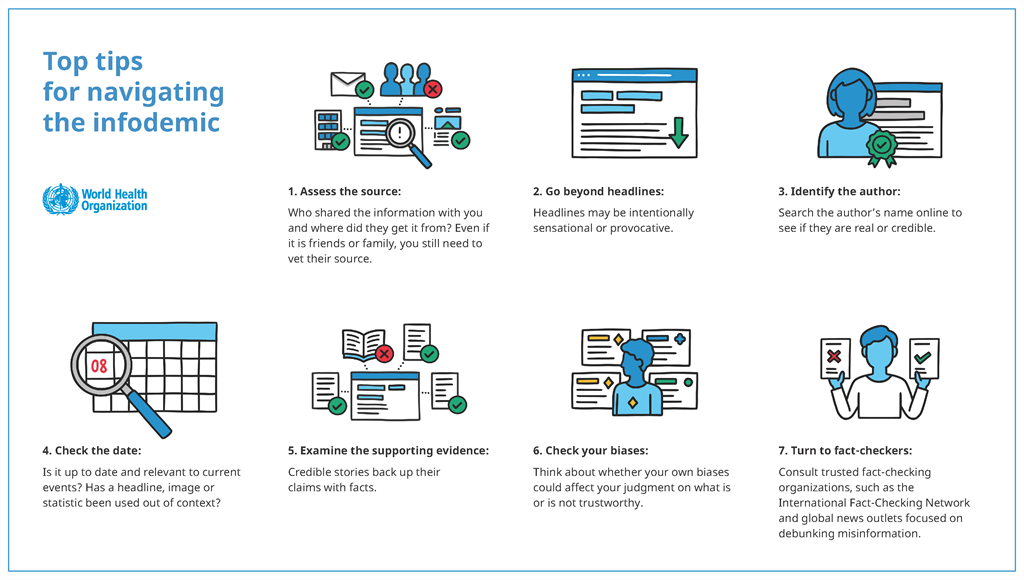
Navigating the infodemic: top tips to identify misinformation or disinformation


Choose carefully


Only share, like or forward content from trusted sources as mentioned earlier on. For me, I will always go back to what WHO, CDC, and KKM say. By doing so, I know I will be sharing facts and not rumors and hear-says or conspiracy theories that cause more panic.


Everyone can help to stop the spread. If you see content online that you believe to be false or misleading, you can report it to the hosting social media platform.


Be cautious


Be careful with what you share. Things aren't always what they seem online. Refrain from sharing information if you are unsure how true or untrue it is. Digital footprint can be impossible to erase. Once you share something that becomes viral, people may screenshot it and spread it around. So, if it turns out to be untrue, can you imagine the repercussions? Call me a coward but I don't want to have someone's blood on my hands.


Be a good example


Respectfully correct or talk to people in your social networks who spread rumors or misinformation. For this, I pledge to commit to spreading facts about COVID-19 to keep society happy this week by only quoting information from WHO, KKM, CDC for anything related to COVID-19 on my social media posts.


Related posts:


Be A Champion Against COVID-19

Mission 2: Promoting a healthy lifestyle

Mission 3: Personal responsibility & self-monitoring

 Mission 4: Staying mentally healthy during COVID-19

Mission 5: Supporting COVID-19 vaccination

Mission 6: Living with the virus


0

Be A Champion Against COVID-19

 Do you want to be part of the solution to COVID-19 in your community?


Let's join the Ministry of Health Malaysia on a six-week campaign to harness the good in people just like all of us and find solutions to the challenges our community is facing. Be a Champion Against COVID-19 alongside a network of amazing, committed, creative and kind people who want to drive change.


No matter who you are, no matter what you do, you can make a big difference to the world by focusing on the issues on your doorstep.


Six weeks. Six missions.


According to the Info Sihat website, participants will receive exclusive content, identify ways to make a difference, and most importantly, take action via 6 missions over 6 weeks, starting on 11 April 2022.
 

Missions will cover topics which include ways to share facts on how to prevent COVID-19, promote a healthy lifestyle, conduct self-monitoring, promote vaccine uptake, and to take care of your mental health during COVID-19.


By taking one small action each week, you will realize your own potential to change the world.


What values motivated you to sign up as a Champion Against COVID-19?


Your values describe the kind of person you want to be, how you want to treat yourself, other people and the world around you. You can always try to live your values, even when things feel out of your control (like in a pandemic!). What are your values?


Turn your own values into an action plan


For each value, think of one or two actions you could take that would express it. Over the next few days, see if you can take one or two of these actions.


Champions Against COVID-19 Campaign FAQs


See the FAQs below.


Source

How to sign up?


Registration links:


BM - https://confirmsubscription.com/h/y/6ED401C06E68214B

Eng - https://confirmsubscription.com/h/y/166548C751A8C316


Related posts:


Mission 1: Share the Facts & Stop Misinformation About COVID-19

 Mission 2: Promoting a healthy lifestyle

Mission 3: Personal responsibility & self-monitoring

Mission 4: Staying mentally healthy during COVID-19

Mission 5: Supporting COVID-19 vaccination

Mission 6: Living with the virus


0