Contact Me

Contact Me
Contact Me

Working Mom Blogger

Working Mom Blogger
Working Mom Blogger

Health & Wellness

Health & Wellness
Health & Wellness


Showing posts with label Period. Show all posts

My Experience of Managing Adenomyosis with Mirena: The First Month


What is Adenomyosis?


Adenomyosis (not to be confused with endometriosis) is medical condition that affects many women, causing pain and discomfort due to the abnormal growth of endometrial tissue (uterine lining) into the muscle (myometrium) in the wall of the uterus.

Some women with adenomyosis have no symptoms. For those who experience symptoms (like myself), we often have painful periods (severe menstrual cramps) and heavy, prolonged menstrual bleeding. Other symptoms may include pelvic pain and abdominal bloating.
 
The agonizing cramps that I experienced closely resembled that of contraction pain, which were debilitating enough for me to apply sick leave nearly every month.

Who Is at Risk of Adenomyosis?


Did you know that adenomyosis is most commonly diagnosed in women between the ages of 40 and 50 who have had multiple pregnancies and childbirths? I have never heard of adenomyosis until the day I was diagnosed in August 2021.
 
I also read that there is a link between hormonal factors and adenomyosis. Premenopausal and perimenopausal women may be at a higher risk because adenomyosis is believed to be estrogen-dependent or hormone-sensitive. Adenomyosis tends to regress after menopause when hormonal fluctuations decrease (when estrogen levels decline). You know what? Initially, upon diagnosis, I actually thought of just waiting it out until menopause.
 
As I mentioned earlier, adenomyosis is not to be confused with endometriosis. However, there is a known association between adenomyosis and endometriosis, another medical condition where endometrial tissue grows outside the uterus. Well, someone close in my family has endometriosis, and these conditions tend to run in the family. 
 
In some cases, adenomyosis occurs without any identifiable risk factors or clear reasons.
 

How Is Adenomyosis Treated?


Typically, treatment options include pain medications (NSAIDs) and hormonal medications (birth control pills, Mirena IUS). Surgery is only necessary if medications don't work.
 
Regarding painkillers, I have been popping Panadol, Ponstan, Celebrex, and Arcoxia like candies for many months. It came to a point that I decided something else has to be done.
 
Hence, I opted for Mirena as the treatment option. You can read about how I ended up choosing Mirena in my previous blog post here.
 

How Mirena Helps Manage Adenomyosis?

 
Mirena is a small, T-shaped intrauterine device that is inserted into the uterus by an Obgyn specialist. Mirena releases a low dose of levonorgestrel, a synthetic form of the hormone progesterone, directly into the uterus.


Reducing Menstrual Bleeding & Alleviating Pelvic Pain

 
Adenomyosis is often associated with painful period cramps and heavy bleeding. This is true in my case.
 
The continuous, slowly-released levonorgestrel by the Mirena helps to thin the endometrial lining, which often leads to a decreased amount of menstrual flow. It also has a local anti-inflammatory effect, potentially reducing the severity of pelvic pain. For women with adenomyosis, like myself, the reduction in cramps and bleeding definitely provides significant relief.
 

Minimizing Uterine Growth

 
By altering the uterine environment (high local concentration of progestogen turns down the responsiveness of estrogen receptors in the adenomyotic tissues), Mirena may help slow the growth of the adenomyotic tissue within the uterine walls. This can contribute to a decrease in the overall symptoms and severity of adenomyosis.
 
In summary, Mirena helps manage adenomyosis by slowing down the growth of excess endometrial tissue, which in turn leads to decreased bleeding, pain, and disease progression. Women with adenomyosis often experience a significant improvement in their overall quality of life after Mirena insertion due to the alleviation of physical symptoms mentioned above.


How's My First Month with Mirena?


The conclusion of my first period post-Mirena insertion marks a noticeable difference. Upon comparing it with my pre-Mirena periods, I observed a lighter flow, the absence of blood clots, and minimal cramps that were quite manageable without the need for painkillers.

However, it takes 3-6 months for Mirena to settle, and my uterus will need time to adjust to having Mirena in it. Therefore, I'll continue to monitor and track the pattern on a monthly basis. So far, I feel very hopeful that I won't be experiencing debilitating cramps moving forward! Wish me luck!

Disclaimer: This blog post is written for informational purposes only and is not intended for self-diagnosis. The content is not a substitute for professional medical advice, diagnosis, or treatment. Always seek the advice of qualified healthcare professionals with any questions you may have regarding a medical condition and to get an accurate diagnosis.


0

Daycare (Day Surgery) Hospitalization Experience at Pantai Hospital Kuala Lumpur


Why Was I Admitted to the Daycare Ward at Pantai Hospital Kuala Lumpur?


To give some context, here's the background story. Long post ahead!
 
I hadn't experienced debilitating period cramps for years after giving birth to my two children, with the last birth in 2016. However, in late 2019, I began to experience unusual and occasionally unbearable period cramps. I didn't think much of it initially and simply endured.
 
When the pandemic struck in March 2020, the monthly pain became so severe that I resorted to painkillers. I started with basic Panadol but eventually needed stronger painkillers like Ponstan, Celebrex, and even Arcoxia.

In August 2021, I visited SJMC and received a diagnosis of adenomyosis. At that time, the O&G specialist suggested a biopsy to rule out more serious issues, but I wasn't ready for further procedures.
 
As time passed, I continued to rely on painkillers every month during my periods. Despite the excruciating pain, I didn't experience unusually heavy bleeding, and my cycles remained regular. I attributed the increasing discomfort to the natural process of aging.
 
In September 2022, I developed a lower abdominal pain that persisted for days after my period. I underwent an abdominal ultrasound at Pantai Hospital Kuala Lumpur, which didn't reveal significant issues. Therefore, I didn't pursue any follow-up appointments based on the results.

Fast forward to August 2023, after enduring so many months of severely debilitating cramps, heavy bleeding with clots, and having to take medical or emergency leave every month, I decided to consult with the staff MO. She advised me that for a woman of my age, who has given birth before, experiencing such debilitating period pain was unusual. She sent me for an ultrasound focusing on my uterus. The results confirmed the adenomyosis diagnosis and the presence of a possible growth, perhaps a myoma. The MO recommended that I consult with an O&G specialist for further treatment.
 
Given that Dr. Paul Ng, the obstetrics & gynecology doctor who delivered my second child, practices at Pantai Hospital Kuala Lumpur, I naturally chose to seek his expertise for further treatment.

Consultation with Obstetrician & Gynecologist Dr Paul Ng and Treatment Options


Based on the reported symptoms, initial diagnosis of adenomyosis, and a transvaginal ultrasound performed by Dr. Paul, there were basically four treatment options available:
 
1. Monitoring: This entailed continued painkiller use for approximately another decade until menopause. Oh dear.
 
2. Oral contraceptive pill (Visanne): I ruled out this option due to concerns about potential weight gain associated with oral contraceptives, which I have read online and heard from other fellow mothers.
 
3. Hysteroscopy D&C + Mirena (IUD) insertion: Hysteroscopy D&C would serve both diagnostic and treatment purposes, addressing abnormal uterine bleeding and removing endometrial polyps. The Mirena, which is a levonorgestrel-releasing intrauterine system helps alleviate heavy menstrual bleeding and pain associated with adenomyosis.

4. Hysterectomy (uterus removal surgery): Dr. Paul advised against this option, considering that my condition wasn't severe enough to warrant such an extensive procedure.

After conducting research over a few weeks, I made the decision to proceed with option 3, which involved hysteroscopy D&C and Mirena IUD insertion.
 

Daycare Admission Checklist


A few days before the procedure, I visited Dr. Paul's clinic to sign the consent form. At the same time, I also received the checklist above from his nurse, which served as a guideline for the necessary preparations prior to admission.
 
In my case, I refrained from bringing any valuable items like rings, necklaces, and earrings. I was also advised to pack spare underwear and sanitary pads. An important reminder stressed the avoidance of Chinese herbs or medications both before and after surgery to prevent any contraindications.

I also needed to fast for 6-7 hours before the procedure.
 

Admission Day


I registered myself at the Daycare Ward at PHKL @ Block B, Level 1 at 7:30am.

 
Here's the patient registration band with my name, IC number, MRN (Medical Record Number), and registration number (the string of alphanumerics that start with PHKL). My height and weight were also recorded after registration.

 
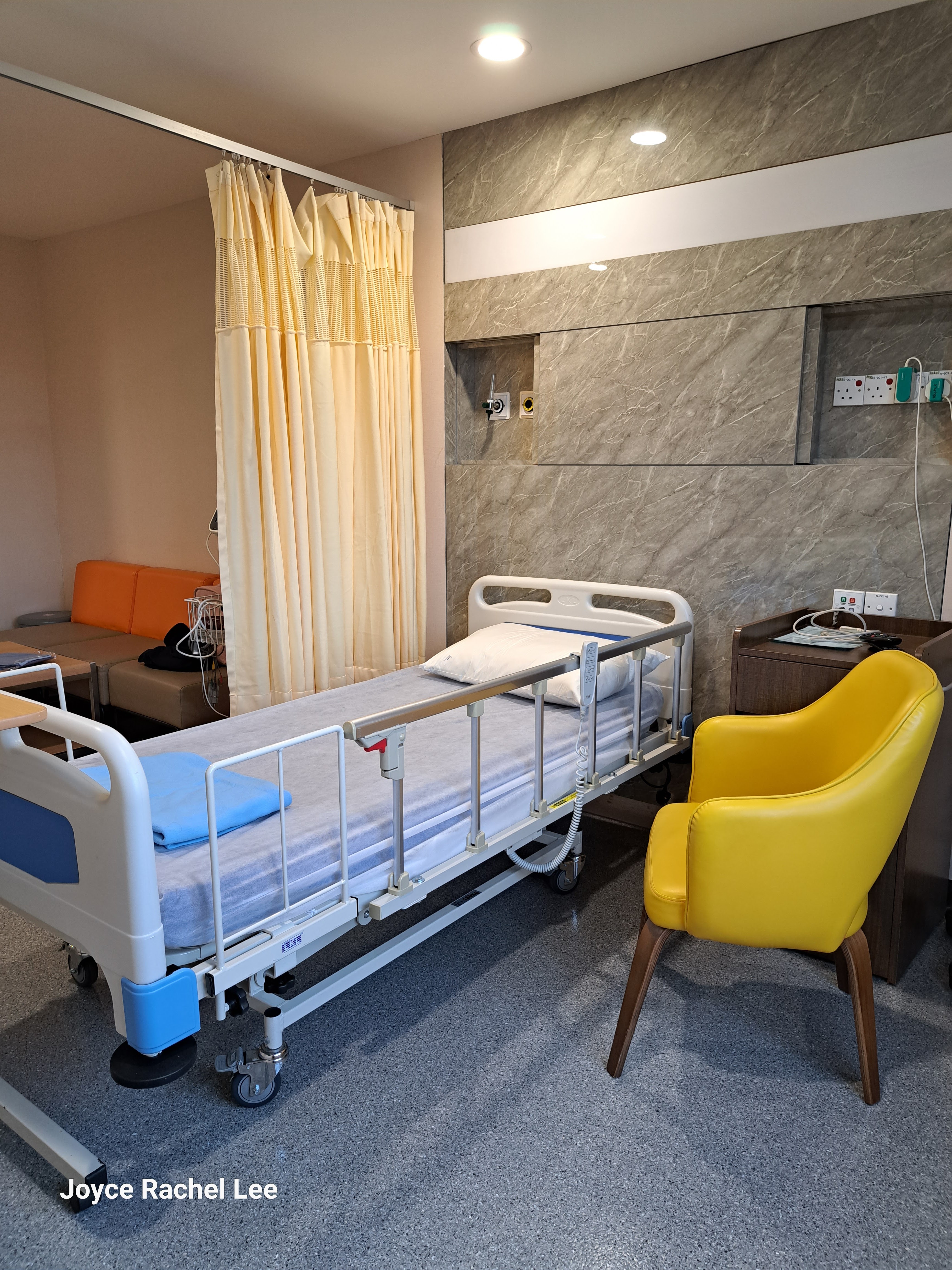
Then, the nurses brought me over to my room. Look at the size of the single-bedded room that I was assigned to!

 
Another angle of the hospital bed.

 
Super clean toilet.

 
A cabinet to store my stuff.
 
 
Patient gown and surgical cap.

 
Making myself comfortable while waiting for the procedure scheduled at 12 noon.

 
Within 20 minutes of registration, the nurses promptly and efficiently measured my blood pressure, conducted an ECG, and drew my blood for blood tests. Awesome!
 

Meeting Anesthesiologist Dr Lim KY

 
At around 9:30am, Anesthesiologist Dr Lim KY and a nurse came to see me for preoperative assessment. He inquired about my medical history, prior surgeries, previous experience with anesthesia, medication allergies, recent illnesses, and other pertinent details.
 
During our discussion, I mentioned a past experience where I felt choked when anesthetic drugs were administered. This happened during my knee arthroscopy procedure. I also informed him of two slightly loose teeth in my lower jaw. Dr. Lim attentively noted my concerns.

From the Ward to Operating Theater and Back to Ward


At 11:20am, one of the nurses came into the room and asked me to change into the patient gown. Then, around 11:35am, I was transported on the hospital bed from Block B (Daycare Ward) to Block C where the Operating Theaters (OTs) are located.
 
Upon arrival at the OT's waiting and preparation area, the OT nurses transferred me to another bed and verified some procedural details with me in a record book. Subsequently, they pushed my bed to an adjoining waiting area, which one of the OT nurses humorously referred to as the "transit area." I distinctly remember checking the wall clock, and it showed 11:48 am, precisely when I settled in.

After a wait of approximately 20 minutes, I heard someone call out, 'Where is Dr. Paul's patient, Lee XXX XXX?' I was then transported to one of the OTs where Dr. Lim and his team were stationed. They directed me to move onto the operating table, where a heated pad was placed, and I laid down on it.
 
Dr. Lim introduced one of the operating room nurses, who began preparing the necessary equipment on my body. Dr. Lim also skillfully administered the IV catheter, all the while engaging in lighthearted conversation to help alleviate my apprehension. In response, I shared that I was simply curious about the entire process.
 
Then, Dr. Paul arrived, greeted me with his reassuring presence, provided a brief overview of the procedure, and then it was showtime!

Thanks to Dr. Lim's attention to my past anesthesia experience, I didn't experience the choking sensation this time. I vividly recalled my eyelids becoming heavier until I eventually blacked out.

Upon waking up, my first instinct was to check the wall clock, which read 1:20 pm. Two other patients shared the recovery area with me. I rested for a while, and to my relief, I didn't feel overly groggy or nauseated, a significant improvement from my previous experience. Around 1:50 pm, I was transported back to my ward.

 
Arrived at my room safe and sound.

 
The IV catheter.

 
The drip to prepare me for hydration before I can eat and drink.

 
Plain water, sandwich, and Milo to break my fast. I rested for a while before I decided to eat. Then I also changed out from the patient gown into my own clothes and went to pee.

 
Due to the hysteroscopy D&C procedure, I experienced some light bleeding, which was entirely anticipated. I simply used the sanitary pad I had brought with me earlier in the day.
 
Around 3:30pm, Dr. Paul came to my room and explained briefly regarding the removal of polyps during the D&C earlier on. He also informed me that he would be issuing a medical leave slip. Then he mentioned I could be discharged after all necessary paperwork were completed by the nurses.

My next follow-up appointment at Dr. Paul's clinic is scheduled next week (7 days post procedure).
 
I took a quick nap until 4:30pm before I called my husband to let him know when could I be fetched from the hospital. I wasn't allowed to drive post GA.

 
Antibiotics for the next 7 days.

 
Panadol Extend were also prescribed for pain management since mild cramping and abdominal discomfort were expected. However, I haven't needed to take any Panadol yet as the discomfort has been quite mild in comparison to my usual period cramps prior to the procedure.
 

Discharged


At approximately 5:30 pm, one of the nurses handed me the office phone. It was Dr. Lim on the other end. He kindly reminded me to take it easy, avoid driving, no swimming, and refrain from engaging in strenuous activities over the next few days.
 
Following this, I was discharged once all the required paperwork was completed.
 

Conclusion

 
Overall, my hospitalization journey was exceptionally pleasant. Choosing Dr. Paul and Pantai Hospital Kuala Lumpur for my treatment was undoubtedly the right decision. Dr Lim and the anesthesia team, OT nurses, and daycare ward nurses were all friendly, professional, and supportive. I have no regrets!

Speedy recovery to myself!


0

Blossoms Cloth Pantiliners ByWiwin


Introducing cloth pantiliners

 What are these pretty little cloth thingies? These are called cloth pantiliners. The ones shown in the photo above are Blossoms Pantiliners made by local mommypreneur, ByWiwin.

I have 10 of these Blossoms Pantiliners and I absolutely LOVE them! I have been using them for the past three months or so. These super lightweight microfleece pantiliners are backed with pretty cotton flannel fabric and one-snap-button adjustment. I really like the matching colors of the cotton flannel (top photo), microfleece (bottom photo), and snap buttons.

The side that touches your private part is the cotton flannel side. The cotton flannel print is so pretty and I just love to take my time to choose which one I want to wear every morning.


These pantiliners are good enough to keep me feeling dry and protect my undies from vaginal discharge stains. I used them daily during the third trimester of my pregnancy. My lochia stopped three weeks postpartum so I've since resumed using these pantiliners daily.

They are pretty easy to wash and dry too because they are thin and microfleece dries very fast. The cotton flannel takes a tad longer to dry but as long as there's sun/air, they dry up well.

When my period resumes (I'm now six weeks postpartum and breastfeeding so no period yet), I will buy her cloth pads. :)

How to fold cloth pantiliners
 

This is one way to fold used (also unused) Blossoms pantiliners.


Find out how to fold them from the quick video below:


Why cloth pantiliners?

For health reasons of course! Disposable pantiliners are typically made with a combination of plastics, cotton, synthetic fibers (e.g. rayon), and wood pulp. Harmful chemical byproduct known as dioxin is found in disposable pantiliners and pads. Long-term usage of disposables causes side effects such as allergic reactions (rashes), hormone disruption, and women problem such as endometriosis (severe period pain). Oh my goodness!

Other reasons include: save money, save environment, support local makers, and I like this last reason: they are oh-so-pretty! Read more on this helpful article: 7 powerful reasons why you should switch to reusable menstrual products


More photos on my Instagram


How to buy?


Have fun!
0

What to do when Aunt Flo visits while you're still breastfeeding?


Aunt Flo returned when my baby turned 11 months. Was I surprised? Not entirely. I know her return is imminent; it's just a matter of time.

When will the first period return?

A few factors:
  • How frequently the baby is nursing;
  • How often the baby is supplemented with bottles;
  • If baby takes a pacifier;
  • How long the baby is sleeping at night;
  • If solids have been introduced; and
  • The mother's own individual body chemistry and the way it responds to hormonal influences associated with breastfeeding.

Any time the stimulation to the breast is decreased, especially at night, menstruation is likely to return soon after. As baby nurses less frequently, prolactin (milk-making hormone) levels fall, reproductive hormones rise, and fertility returns, i.e. period returns.

The main thing is this: the more frequent you nurse your baby at your breasts (day and night), the later Aunt Flo returns. In my case, I nurse my baby whenever I'm with him. He's not bottle-fed at home and he never uses the pacifier. At night, he wakes up every 2-3 hours to nurse.

I returned to work when he was 3 months plus; he started on solids when he was 6 months old; my period returned when he turned 11 months. Not too bad, although I secretly hope the red tide never returns for as long as he's still breastfeeding. Hahaha! By the way, I'm still breastfeeding although he's officially a one-year-old tot. :)

What might happen when Aunt Flo returns?

The most important thing to remember is that the return of period does not mean the end of breastfeeding. The milk does not sour or "go bad" when you are having a period. The milk is no less nutritious when you are menstruating than when you are not.

These temporary changes might happen: nipple tenderness (I don't feel this), temporary drop in milk supply the few days prior to getting your period and for a few days during (yeah, this is annoying!), baby wanting to feed more frequently due to the temporary drop in milk supply (I think so), or baby wanting to feed less, as your baby may detect a slight change in taste during this time (not in my case).

What to do to during temporary drop in milk supply?

Some women experience a drop in milk supply from ovulation (mid-cycle) until the first day or two of the next menstrual period. A woman's blood calcium levels gradually decrease during this period of time, and for some women the drop in blood calcium causes a drop in milk supply. For women who have this problem, calcium/magnesium supplements may be helpful. This practice has also been reported to eliminate most uterine cramping and some premenstrual discomfort such as water retention.

The recommended calcium supplement dosage is between 500mg calcium/250mg magnesium and 1500mg calcium/750mg magnesium (the higher dosage is generally more effective). Calcium dosages this high should not be taken alone, but as a calcium/magnesium (or calcium/magnesium/zinc) combination. Otherwise the calcium will not be adequately absorbed into your body.

The amount of supplement depends on the composition of your diet -- the more animal protein, the more calcium/magnesium needed. If you are a vegetarian or vegan, the lower dosage may work fine for you. Start the supplement when you ovulate, and continue through the first few days of your menstrual period. If periods are irregular, then begin calcium/magnesium at 14 days after the beginning of your last menstrual cycle, or simply take the supplement every day.

Article sources:


2

Project 365 2011 - Photo #251

Meds

After Googling, I found out:

[Left, orange] Diclofenac Sodium belongs to a class of drugs called non-steroidal anti-inflammatory drugs (NSAIDs). It is used to reduce pain, inflammation, swelling, and stiffness caused by several types of arthritis.

[Right, purple] Hyoscine-N-Butylbromide is a type of medicine called an antispasmodic. It is used to relieve colicky abdominal pain that is caused by painful spasms in the muscles of the gastro-intestinal (GI) or genito-urinary (GU) tract.

Diclofenac Sodium was prescribed by a pharmacist last week after I told her I wanted something that will act faster than Ponstan, a type of painkiller. Hyoscine-N-Butylbromide was prescribed by a doctor a few months back. Surprisingly, both meds take effect as slow as Ponstan in terms of getting rid of period pain. This month's rather bad. Must be due to the amount of caffeine I consumed for the past three weeks after I changed job.

Perhaps I should try out: Kordel's Women's Formula 1 and Eu Yan Sang Bak Fong pills. They should be better than painkillers, right?


0

Pain Management (Part I) - Menstrual Pain (Dysmenorrhea)

Photo source

The discomfort associated with menstrual pain (also known as dysmenorrhea) range from cramps in the lower abdomen, diarrhea and frequent urination to sweating, bloating, nausea and vomiting. Mood swings, head and back aches, and upper thigh and back pain are also not unusual.

Source: Menstrual Cramps

What causes menstrual cramps?


1. Each month, the inner lining of the uterus (the endometrium) builds up in preparation for a possible pregnancy. After ovulation, if the egg is not fertilized by a sperm, no pregnancy will result and the current lining of the uterus is no longer needed.

2. The woman's estrogen and progesterone hormone levels decline, and the lining of the uterus becomes swollen and is eventually shed as the menstrual flow and is replaced by a new lining in the next monthly cycle.

3. When the old uterine lining begins to break down, molecular compounds called prostaglandins are released. These compounds cause the muscles of the uterus to contract.

4. When the uterine muscles contract, they constrict the blood supply (vasoconstriction) to the endometrium. This contraction blocks the delivery of oxygen to the tissue of the endometrium which, in turn, breaks down and dies.

5. After the death of this tissue, the uterine contractions literally squeeze the old endometrial tissue through the cervix and out of the body by way of the vagina.

6. Other substances known as leukotrienes, which are chemicals that play a role in the inflammatory response, are also elevated at this time and may be related to the development of menstrual cramps.


Photo source

Why are some cramps so painful?

1. Menstrual cramps are caused by the uterine contractions that occur in response to prostaglandins and other chemicals. The cramping sensation is intensified when clots or pieces of bloody tissue from the lining of the uterus pass through the cervix, especially if a woman's cervical canal is narrow.

2. The difference between menstrual cramps that are more painful and those that are less painful may be related to a woman's prostaglandin levels. Women with menstrual cramps have elevated levels of prostaglandins in the endometrium (uterine lining) when compared with women who do not experience cramps.

3. Menstrual cramps are very similar to those a pregnant woman experiences when she is given prostaglandin as a medication to induce labor.

Photo source

Source: Guardian Pharmacy Leaflet

Two Types of Dysmenorrhea

Primary dysmenorrhea: Typically occurs in adolescents and usually begins 2 to 3 years following the first period. The cramps begin just before the onset of bleeding and usually stop within 2 or 3 days. They may persist throughout your 20s or until you deliver a child, after which, for unknown reasons, they're likely to decrease in intensity or go away entirely.

Secondary dysmenorrhea: Occurs mainly in women in their 30s or 40s and is attributed to some underlying causes such as endometriosis, fibroid or pelvic inflammatory disease. It can often be distinguished from primary dysmenorrhea by the fact that the pain usually continues for the duration of bleeding.

Relief for Cramps

1. Analgesics: If your cramps are too painful to ignore, try paracetamol or non-steroidal anti-inflammatory drugs as ibuprofen and mefenamic acid. Such medications work best when taken before and during your period.

2. Nutritional supplements: Some women find that nutritional supplements such as evening primrose oil, magnesium, calcium or Vitamins B6 help relieve their pain.

3. Exercise: It reduces discomfort.

4. Apply some heat: Warmth can often soothe cramps. Take a long, hot bath or place a hot water bottle or heating pad on your stomach.

5. Gently massage your lower abdomen.

6. Go easy on coffee: Taking in less caffeine does help some women feel better.

7. Get enough sleep: Dealing with discomfort is a lot easier when you're not tired and cranky.

I've blogged about remedies for menstrual cramps here. Here's the list of articles that I've compiled about menstrual cramps.

Interesting, right?


Photo source

Anyway guys, here are some words of wisdom. Love your woman and try to understand that she has to go through some sort of discomfort EVERY month for a period that lasts up to 4 or 5 days.


Your understanding and support mean a lot to her, provided that she also does her part to find relief solutions that suit her best. :)

0

Project 365 2011 - Photo #101

Cramp

I found a very informative leaflet about Pain Management (Health Care tips) published by Guardian Pharmacy.


0

Project 365 2011 - Photo #87

Back-to-school

Work has been very hectic these few weeks. I need to take down notes to remind myself of daily tasks. I was so tired yesterday and slept for 10 straight hours. I haven't been sleeping at 10PM for ages. And the fact that it's the week of the ladies' cycle makes things worse. Gah.


0

Discover Your WOW Personality

Last week, I wrote about being WOW-ed! by the new KOTEX® LUXE*. Here's the post.

Well, have you gotten yourself the KOTEX® LUXE* Ultrathin Design Pads limited edition promotion tin yet? Just visit any Guardian, Giant, Jusco, Tesco or Watson outlet and get them at RM4.90 for a pack of six (three designs). Hurry while stocks last!

Now that there are six motifs or designs to choose from, you might be spoiled for choice. Well, I do face this little problem. :P But, I was saved by an interesting, intuitive, and informative personality test to reveal my WOW Personality so that I know which motif/design suits me! 


I've compiled six different WOW Personalities: Artsy, Beach Babe, Chill Girl, Confident Chic, Fashionista, and Little Miss Perfect.

Artsy is my first motif.

Little Miss Perfect is my second motif.

So, what about you?

One tin comes with six packs (three designs). I'll buy two tins and get all six designs! :D


0

Be WOW-ed! by the New KOTEX® LUXE*

Pads, the most intimate, girls-only product, play a significant role in the monthly affairs in a girl's life, apart from premenstrual syndrome (PMS) and period pain, I bet most girls would agree. ;)

However, so far, the best we girls can get in the market are functional pads that come in boring packaging with uninteresting design. Well, what choice do we have unless somebody takes the initiative to do something different about it?


Having said that, I'm glad that Kotex has taken the lead to "revolt"! The revolution has begun...


You will be WOW-ed!


KOTEX® introduces the world's first and only pad that combines superior technology with stunning design -- the new KOTEX® Luxe* Ultrathin Design Pads. Now we have fashion AND function in feminine care -- a pretty cool and catchy urban concept.

I'm glad to be among the first in Malaysia to enjoy this breakthrough experience with the new KOTEX® LUXE*.

Kotex is not a foreign name among Malaysian girls. We grow up knowing what Kotex is when we sneaked into our mother's or elder sister's wardrobe for fun; we share about what brand we use among our gal pals; we debate among ourselves which brand is the best. So on, and so forth.

Being the market leader in feminine care in Malaysia for 58 years, Kotex definitely understands Malaysian ladies' needs and wants.
KOTEX® LUXE* -- the latest innovation from Kotex marks the beginning of a new era in feminine care. Now, pads are no longer just a form of protection but also one of self-expression.

Take a look at the new KOTEX® LUXE* Ultrathin Design Pads that comes in a range of six gorgeous designs influenced by contemporary fashion trends. Sweet! Which range do you fancy? The sweet 'girl-next-door' feel or the 'indie chic' look designs? The key selling point is self-expression. I have been WOW-ed! I love them all!

KOTEX® LUXE* Ultrathin Design Pads -- sweet 'girl-next-door' design.

KOTEX® LUXE* Ultrathin Design Pads -- funky 'indie-chic' design.

KOTEX® LUXE* Fusion Night Pads -- available in 32cm.Okay, gorgeous designs aside. What about functionality? KOTEX® LUXE* Ultrathin Pads are already synonymous with superior performance with its MicroMax® 2 Technology -- a super absorbent ultrathin core that provides maximum protection and its soft cottony cover. So, it's proven that the new KOTEX® LUXE* Ultrathin Pads are gorgeous and functional at the same time.

If you're fascinated, let me tell you something more...

The new KOTEX
® LUXE* Ultrathin Desgin Pads will retail from 1st November 2010 at all Guardian, Giant, Jusco, Tesco, and Watson outlets at RM4.90 for a pack of six (three designs). The newly upgraded KOTEX® LUXE* Fusion Day pads (23cm) and KOTEX® LUXE* Fusion Night pads (32cm) will retail at RM15.90 for packs of 20 and 14 respectively.

Note: The tin version of the new KOTEX® LUXE* Ultrathin Pads that comes with six pieces per tin is a limited version. Do get them while stocks last!

There's a WOW hardcover notebook and a mug in the exclusive preview kit too. Nice!

Update:
Discover Your WOW Personality


0